

The Journey to Regenerative Finance
For decades, I have worked at the intersection of investment strategy, corporate responsibility, and ecological initiatives—always seeking to bridge the precision of finance with the deeper complexity of human and natural systems.
The challenge has never been a lack of capital. It has been a lack of alignment.
Alignment between profit and purpose. Between growth and sustainability.Between what we measure—and what truly matters.
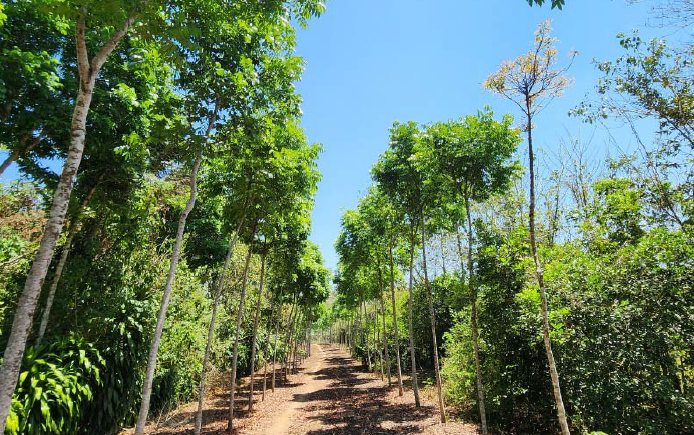
About a year ago, that alignment came into focus in an unexpected place: a winding, uneven road up a mountainside in Costa Rica.
A Defining Moment
Seated in a vehicle climbing through dense forest terrain, I found myself among an unlikely but powerful group—business consultants, forest owners, and the founders of Forests to Fortune, Alain and Javier.
As the road twisted upward, so did the conversation.
They described a model that immediately stood apart: the ability to unlock liquidity in regenerative, high-value tropical hardwoods through a digitally enabled marketplace. A system where forests were not simply preserved—but activated as productive, measurable assets.
By the time we reached the summit, I knew I was witnessing something different.
Not just another sustainability initiative. A new financial framework.
Today, I proudly serve on the Advisory Council of Forests to Fortune.
Nature as an Asset Class
In finance, the most meaningful breakthroughs happen when we begin to see value where others only see uncertainty.
Forests to Fortune represents that shift.
It reframes nature—not as a passive resource—but as a dynamic capital system. Living forests become assets that generate diversified returns while strengthening the ecosystems they depend on.
This model introduces a compelling set of advantages:
DiversificationBiological assets that operate independently of traditional market cycles, offering low correlation to conventional investments.
Accelerated GrowthTropical hardwoods that mature in approximately 18–20 years—significantly faster than comparable species in northern climates.
Liquidity Through InnovationA digital marketplace that enables participation and potential liquidity throughout the growth cycle, rather than only at harvest.
Transparency & VerificationIndividually tracked trees, verified through blockchain-enabled systems, providing clarity and accountability at every stage.
Real-World Asset BackingTangible ownership structures supported by formal agreements, grounding the investment in physical, measurable assets.
Social StabilityLocal workforce development and education initiatives that reduce operational risk while strengthening the surrounding community.
This is not simply investing in trees. It is investing in a system designed to perform across financial, environmental, and social dimensions.
Community Return: Where Growth Is Shared
In every successful regenerative model, community is not an afterthought—it is foundational.
At Las Azucenas, our flagship forest, local technicians—many of whom were born on the land—now play a leading role in restoration and management. Their knowledge, connection, and long-term presence bring continuity and care that cannot be replicated externally.
This is not job creation in the traditional sense. It is legacy building.
When communities thrive, they protect the ecosystems around them. That alignment leads to stronger governance, more consistent outcomes, and a level of resilience that purely financial models often fail to achieve.
Planetary Return: Moving Beyond Offsets
Much of what is labeled “green investing” today focuses on mitigation—reducing harm, offsetting impact, or slowing decline.
Regenerative finance goes further.
It is about restoration.
Forests to Fortune is designed to actively rebuild ecosystems—improving soil health, enhancing biodiversity, and preserving natural reserves within cultivated landscapes.
The outcome is not just environmental benefit. It is systemic resilience—ecological, financial, and reputational.
What Informed Investors Should Be Asking
As capital evolves, so should the questions behind it.
How many assets in your portfolio actively improve the systems they operate within?
Which investments are aligned with long-term value creation—not just short-term performance?
How many are positioned ahead of emerging ESG, carbon, and biodiversity accounting standards?
These are not abstract considerations. They are becoming central to how value is measured and preserved.
Forests to Fortune was built with these questions in mind.
A New Allocation Mindset
We are entering a period where capital is being redefined—not just by what it earns, but by what it enables.
The most forward-thinking investors will not choose between profit and purpose. They will recognize that, increasingly, they are the same.
Allocate capital to what regenerates, unifies, and aligns profit with purpose.


Comments